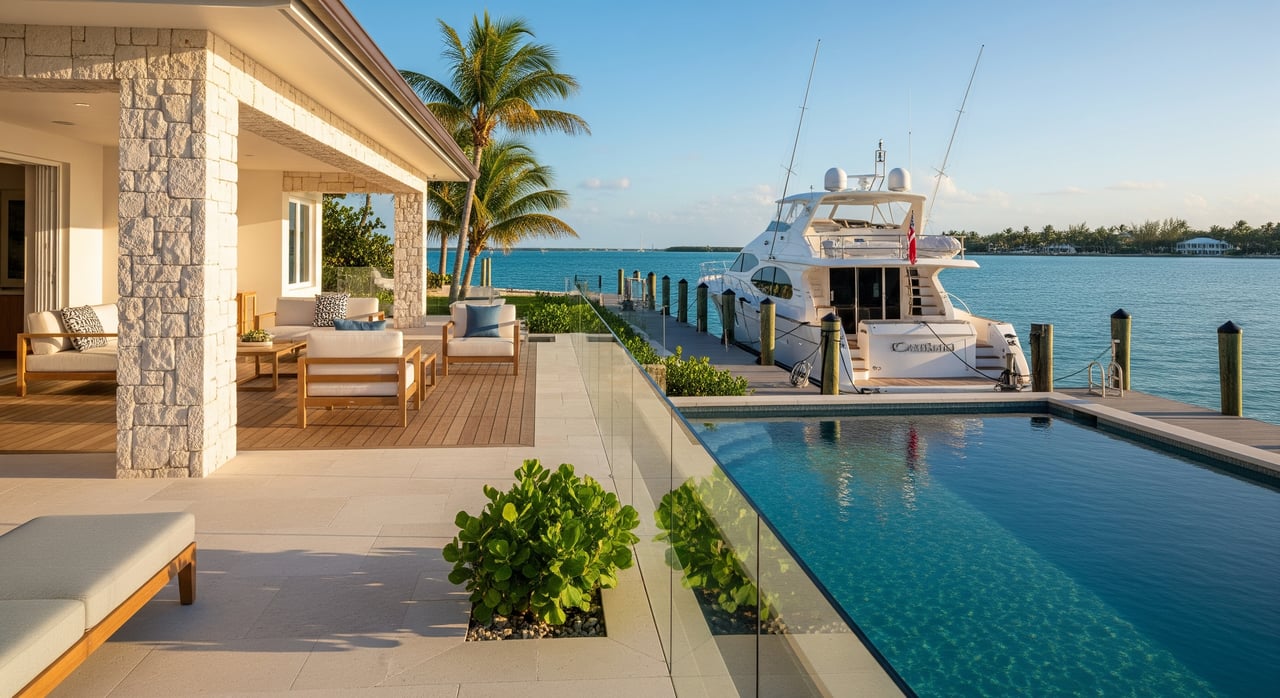
If your idea of island living includes stepping from your terrace onto your own boat, you are in the right place. Paradise Island offers direct access to Nassau Harbour and world-class marina services, but getting a home truly yacht-ready takes planning and precision. In this guide, you will learn how to define berth capacity, design the right dock, secure utilities, navigate permits, and build with storms in mind. Let’s dive in.
What “yacht-ready” means here
A yacht-ready home on Paradise Island supports safe berthing, dependable utilities, and straightforward access to Nassau Harbour. As a benchmark, the nearby Atlantis Marina hosts large yachts with a protected basin, published depths, and shore power up to 30–100 amps with single and three-phase options. While most private properties will not match a resort marina, you can use these specs to gauge claims about capacity and services.
When you evaluate a property, define the maximum vessel length, beam, and draft it can support. Confirm the approach route, any bridge or channel limitations, and whether utilities at the dock meet your yacht’s needs.
Know your water and approach
Paradise Island docks connect into Nassau Harbour, where depths and seabed conditions vary by site. A hydrographic check helps you understand actual depths at low tide and seasonal changes. If you plan to berth a larger yacht, compare your clearance needs to published marina depths and channels at Atlantis Marina.
Ask for an as-built dock survey and a bathymetric survey of the berth area. This is the fastest way to verify whether the water truly suits your vessel today and in the future.
Design the right dock
Choose a dock system that fits local exposure, tide, and boat size. Floating systems rise with the tide and work well where depth fluctuates, while pile-supported docks offer excellent stability for heavier boats and lifts. For pros and cons by system type, review this concise dock systems overview.
Size the berth with a margin for growth. A slip sized for 30 to 40 feet is not yacht-ready if you expect to host a 60-foot vessel next season. Confirm hardware, cleats, and fendering are rated for your target displacement.
Power, water, and pump-out
Reliable shore power and fresh water are non-negotiable. As a practical reference point, Atlantis Marina offers single and three-phase power from 30 to 100 amps and on-dock water. Private docks should scale to your boat’s actual draw and include safe cable management and elevated disconnects.
Plan for sewage handling. Pump-out access is essential, either on site or via a service boat. Many owners fuel at marinas or through licensed services rather than storing large volumes on property, which involves safety and permitting. For considerations around fueling and construction practices, see this dock-construction guidance.
Build for storms
The Bahamas is highly exposed to storms and sea level rise. National analyses note that coastal assets on New Providence and Paradise Island face ongoing risk from surge and erosion. For context on exposure, review the Bahamas’ climate and sea level risk statement.
Design for resilience. Elevate living areas and critical systems above the design flood elevation with appropriate freeboard. Use engineered pile or pier foundations, open lower levels, and flood-resistant detailing as outlined in the FEMA Coastal Construction Manual. Ask for engineering documentation that shows how docks, lifts, and electrical systems address surge, waves, and scour.
Permits and entry rules
Any new dock, seawall, or shoreline change typically requires permits and may involve environmental review. The Bahamas’ planning guidance emphasizes coastal buffers, site-by-site assessment, and conditions on shoreline works. Before you add or expand a dock, consult the nation’s coastal guidance and permit process outlined in the Physical Planning Handbook.
If you or your guests arrive by private vessel, know the entry rules. The Bahamas updated cruising permits in 2025 and introduced the Frequent Digital Cruising Card for repeat visitors. Review the current Bahamas boating regulations and coordinate with marina staff for customs and immigration as needed.
Budget, insurance, and upkeep
Dock costs vary widely. A simple private dock can be relatively modest, while engineered pile systems with lifts, utilities, and premium materials can reach into the high five or six figures. For broad planning ranges, see this consumer guide to the cost to build a dock.
Salt air demands a maintenance plan. Choose corrosion-resistant materials and plan for inspections, hardware torque checks, and anode replacement. For material choices and corrosion control basics on floating platforms, see this overview of floating platform construction and corrosion.
Buyer and seller checklists
Use these quick checks to confirm a property is truly yacht-ready:
- Get an as-built dock survey and a bathymetric survey of the berth area. Compare capacity to published marina benchmarks at Atlantis Marina.
- Request permits and engineering reports for the dock, seawall, and shoreline works. Review coastal rules in the Physical Planning Handbook.
- Verify shore power capacity, fresh water supply, and pump-out access at or near the dock.
- Confirm vessel entry procedures, including cruising permits and the Frequent Digital Cruising Card, using official Bahamas boating regulations.
- Ask whether structural and electrical systems meet wind, flood, and surge guidance similar to the FEMA Coastal Construction Manual.
Ready to design or buy?
A well-planned Paradise Island home can deliver effortless yachting days and confident storm-season nights. If you want a curated shortlist of properties with real berth capacity and the right infrastructure, or guidance on upgrades that will resonate with buyers, connect with Ryan Knowles for a private consultation.
FAQs
What makes a Paradise Island home “yacht-ready”?
- It safely supports your vessel’s length, beam, and draft, provides dependable shore power and water at the dock, offers pump-out access, and allows straightforward navigation to Nassau Harbour.
How deep should my private berth be near Nassau Harbour?
- Depths vary by lot and tide, so confirm with a bathymetric survey and compare your needs to published depths and channel guidance at nearby Atlantis Marina.
Do I need permits to build or expand a dock on Paradise Island?
- Yes, shoreline works typically require permits and may involve environmental conditions; consult the nation’s coastal rules in the Physical Planning Handbook.
What shore power should I plan for at a private dock?
- Match your yacht’s draw and use marina benchmarks as a guide; for reference, Atlantis Marina lists single and three-phase service from 30 to 100 amps.
Can guests clear Bahamas customs at a private dock on Paradise Island?
- Clearance is commonly handled by marinas, so verify procedures and requirements in the official Bahamas boating regulations and coordinate with authorities in advance.